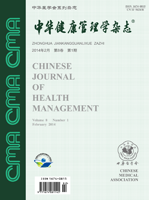
中华健康管理学杂志
2012年 · 第06卷第01期
中华健康管理学杂志
With the advancement of life science and biology and health industry in the 21st century, China's health management has experienced the initial development stage of "hard start and innovative practice". "Chinese Journal of Health Management" and the Health Management Branch of Chinese Medical Association, as important banners leading the research and practice of health management in China, have also gone through four years of struggle. Among them, although we have paid hard work and sweat, we have also reaped fruits and happiness; Although we have accumulated a wealth of experience, we have also seen many lessons and shortcomings worth learning, which make us full of confidence and hope for the future. In the next 10 years, China's health management will move towards the grand goal of "great development of disciplines and great prosperity of industries", and will soon enter the stage of standardized growth. Facing the new historical opportunity period for the development of health management in China, Chinese Journal of Health Management and the Health Management Branch of Chinese Medical Association shoulder great historical responsibilities and realistic challenges. Establishing a health management discipline system with Chinese characteristics based on multidisciplinary integration and innovation and a health management evidence-based medicine practice system based on translational medicine are the first tasks before us. Assessing the situation, only through multi-disciplinary integration and innovation, multi-professional achievement transformation and integration, multi-field evidence-based practice and application can we win the development and progress of China's health management in the next five years, and the achievements and glory in the next 10 years.
China's health management has experienced the initial development stage of "hard start and innovative practice", and is about to enter the standardized growth stage of "great development of discipline and great prosperity of industry". In such an important turning period, the construction of health management institutions is facing opportunities and challenges.
The 21st century is an age of aging population. It is estimated that in 2025, the number of elderly people over 60 years old in China will reach 290 million, accounting for about 1/5 of the total population. Compared with other countries, China's aging is characterized by huge scale, rapid growth, regional imbalance, inversion of urban and rural areas, more women than men, and getting old before getting rich. Rapid population aging brings serious challenges to China's health system. The continuous aging of the population leads to an increase in the incidence and prevalence of chronic diseases, an increase in social and personal healthcare costs, and a decrease in the quality of life of patients. The need for medical services, especially care, of the elderly is more urgent. Therefore, we must advocate a healthy lifestyle, build a reasonable health service system, focus on perfecting the construction of medical care and nursing guarantee system for the elderly, strengthen the development of old-age care institutions and appropriately develop geriatric specialist hospitals, so as to realize healthy aging and improve the quality of life of the elderly.
Diabetes mellitus is a systemic metabolic disease caused by the combination of genetic and environmental factors. Its prevalence is rising constantly, and it has become the third disease that harms human health after tumors and cardiovascular diseases. Diabetes health education is the basic measure of diabetes treatment and plays an important role in the comprehensive treatment of diabetes[
In recent years, with the improvement of living conditions and the change of lifestyle, the number of obese people in China is increasing day by day. According to statistics, the overweight and obesity rate among adults in China in 2009 was 39.6%[
With the development of economy and the improvement of living standard, people's awareness of self-health care has increased rapidly, and the health examination market has been expanding continuously. Hospitals have attached more and more importance to the health examination market. High-quality physical examination service is one of the keys to win the trust and loyalty of customers, and it is also an important means to promote the orderly development of hospital health examination. However, in the long-term health management service process, even hospitals with good reputation and excellent medical staff will inevitably make service mistakes. Service remediation can not only improve the hospital's own service system and improve the image of health management service, but also improve customer satisfaction, achieve "second satisfaction", and make them re-establish their trust and loyalty to the hospital.
 暂无数据
The first working meeting of the second editorial committee of Chinese Journal of Health Management was successfully held in Beijing on December 12, 2011. Professor Rao Keqin, Secretary of the Party Committee of Chinese Medical Association, You Suning, President and Editor-in-Chief of Chinese Medical Association Magazine, Cai Lifeng, Vice President of Chinese Medical Association Magazine, Academician Liu Depei, President of Chinese Academy of Medical Sciences and President of China Union Medical University, and other leaders and experts, as well as 110 editorial board members and correspondence editorial board members from all over the country attended the meeting.
本期目次