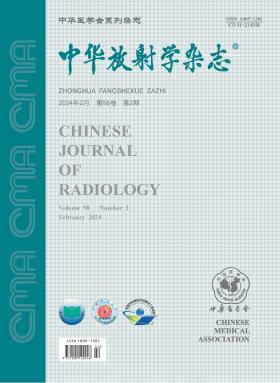
中华放射学杂志
2024年 · 第58卷第02期
中华放射学杂志
Expert quote: Lung cancer is the leading cause of cancer death worldwide, and it is usually diagnosed at an advanced stage. Early screening, early diagnosis and early treatment of lung cancer can effectively reduce mortality. With the extensive clinical application of CT, especially low-dose CT, the detection rate of pulmonary nodules in the population has increased significantly. In order to provide personalized treatment for patients with pulmonary nodules in time, it is very important to accurately determine the pathological type of pulmonary nodules. Although the American College of Radiology (ACR) has released the Lung Imaging Report and Data System (Lung-RADS), a pulmonary nodule screening classification system, both the Brock model used in Lung-RADS and the Mayo model based on western populations have been repeatedly proved to be unsuitable for direct clinical application, especially for Asian populations. Therefore, it is urgent to develop a CT imaging prediction model for lung nodules suitable for the characteristics of Chinese population. Therefore, Professor Ye Zhaoxiang's team from Tianjin Medical University Cancer Hospital has conducted a series of studies on the clinical management status of small pulmonary nodules, the prediction of pathological invasiveness of subsolid pulmonary nodules and the pathological prediction of solid pulmonary nodules. With the in-depth study of tumor heterogeneity, customized treatment based on tumor pathology and pathological subtypes has become a research hotspot in the field of precision medicine today. Imaging-pathomics fusion technology and deep learning, as emerging technologies in imaging AI analysis mode, provide a new perspective to explore tumor heterogeneity. In the future, with the help of artificial intelligence technology, we can explore the potential information contained in CT image information to reflect the difference of pathological phenotype, and build a mapping model based on image-pathomics fusion to further prospectively predict the preoperative pathological types and subtypes of lung cancer patients. This research direction can establish a foundation for clinical research on surgical procedure selection, biological therapy efficacy prediction, and prognosis prediction of advanced lung cancer based on preoperative pathological subtypes, and has important clinical application value.
本期目次