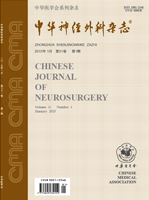
中华神经外科杂志
2015年 · 第31卷第04期
中华神经外科杂志
intracranial arachnoid cyst (IAC) is mostly a congenital disease. It is a common benign intracranial lesion in children, accounting for about 1% of intracranial lesions[
Female, age 35 years. Admitted to hospital due to head trauma caused by car accident for 2 h. The consciousness was basically clear, the GCS score was 13, the bilateral pupil diameter was 2.5 mm, the light response was sensitive, the neck was resistant, the muscle strength and tension of the limbs were normal, the physiological reflex was normal, and the pathological reflex was not drawn out. Scalp contusion in the right temporo-occipital region. The first CT showed a small amount of subdural hematoma on the left side with left frontal brain contusion, with midline centered and coronal suture open. After 4 hours of admission, the patient's consciousness decreased to GCS score of 10. After CT reexamination, the left frontal lobe brain contusion and intracerebral hematoma were significantly enlarged, and the space-occupying effect was obvious, but no epidural hematoma was found (
Intracranial aneurysm is one of the common types of stroke. subarachnoid hemorrhage (SAH) caused by aneurysm rupture is a neurosurgical emergency, with an overall mortality rate of 50%, which seriously threatens human health and life. Early brain injury after subarachnoid hemorrhage is closely related to delayed brain injury and the prognosis of patients[
Parkinson's disease (PD) is a common neurodegenerative disease in middle-aged and elderly patients. In addition to motor symptoms such as tremor, myotonia, slow movement and postural disorders as its main clinical manifestations, non-motor symptoms (NMS) such as anosmia, constipation, sleep disorders and depression are also its significant features[
As a novel tumor suppressor gene, leucine zipper tumor suppressor 2 (LZTS2) is widely involved in the occurrence, proliferation, migration and maintenance of tumor stem cell function of various tumors including glioma. It is an important candidate tumor suppressor gene and can be used as a novel therapeutic target for glioma.
intracranial aneurysm (IA) refers to tumor-like protrusion caused by local cerebral vascular wall abnormalities, including sac aneurysm with neck and fusiform aneurysm without neck[
Craniocerebral injury is the main cause of death and disability in adolescents, and its accurate assessment and effective intervention have always been a concern in the field of neurosurgery. However, the traditional evaluation methods, such as Glasgow coma scale (GCS) and CT examination, are not high in specificity and sensitivity, which can no longer meet the needs of modern medicine. In recent years, the rapid development of neuroimaging, neuroelectrophysiology and detection of craniocerebral injury markers provides more objective and accurate methods for the diagnosis and prognosis of craniocerebral injury, and is also conducive to the study of pathological mechanism of craniocerebral injury and the exploration of new treatment methods. The progress in clinical application of modern evaluation techniques for craniocerebral injury is reviewed.
neurofibromatosis (NF) is a class of autosomal dominant hereditary diseases, which mainly include three subtypes: type 1 NF, type 2 NF and Schwann cell tumorosis. Such diseases have great phenotypic differences, mainly nervous system tumors, skin lesions and peripheral nervous system lesions, causing multiple and progressive damage, which brings great difficulties to treatment. Current reasonable measures include screening of at-risk populations, early diagnosis, close follow-up, and the establishment of a framework for multidisciplinary treatment based on the characteristics of the development of the natural course of NF. In this paper, the latest research on the pathogenesis, genetics, clinical manifestations and treatment of NF is reviewed.
本期目次